

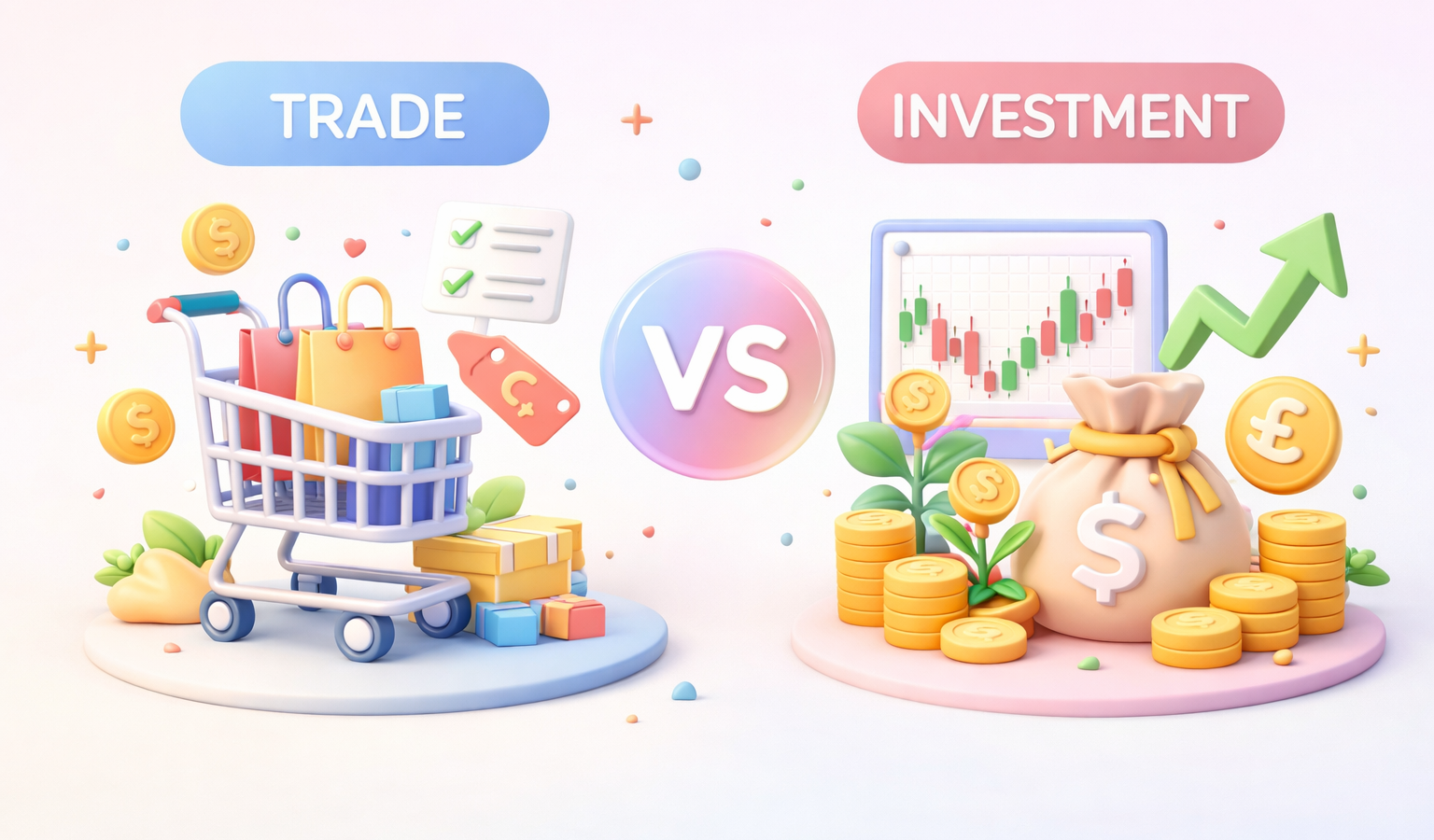
Many people think trading and investing are the same. They are related but very different, and this confusion often leads to wrong expectations. At first, I also thought trading and investing were just different names for the same thing, until I realized they require completely different mindsets. This article will break it down simply.
What Is Investing?
Investing is about buying assets for long-term growth. When you invest, you’re typically holding onto your assets for years, focusing on their value rather than short-term price fluctuations. Examples:
- Buying stocks and holding onto them for several years as their value appreciates.
- Investing in cryptocurrency with a long-term perspective, hoping for significant future gains.
What Is Trading?
Trading involves the short-term buying and selling of assets, with a focus on price movement. Traders make more active decisions, often purchasing and selling assets multiple times within a single day or week.
Key Differences Between Trading and Investing
Time Horizon
- Trading → Short-term
- Investing → Long-term
Frequency of Decisions
- Trading → Frequent
- Investing → Less frequent
Risk Style
- Trading → Controlled per trade
- Investing → Long-term exposure
Tools Used
- Trading → Charts, indicators
- Investing → Fundamentals
Which One Makes More Money?
Both trading and investing can be profitable, but both also come with risks. The potential for profit depends on skill, discipline, and strategy. It’s essential to avoid the hype: there is no guaranteed “better” option between trading and investing.
Which One Is Better for Beginners?
Investing is generally easier to start for beginners, as it requires less immediate knowledge and experience. Trading, on the other hand, demands more learning and quick decision-making. However, trading provides faster feedback on your decisions, while investing requires patience and a long-term outlook.
Can You Do Both?
Yes, many people successfully engage in both trading and investing. For example, you can maintain a long-term investment portfolio while also having a separate trading account. This approach allows you to invest for wealth accumulation while trading for active income.
Where Technology Fits In
Technology plays a significant role in both trading and investing. Trading is highly tech-driven, relying heavily on data analysis and automated tools. Investing is also becoming increasingly tech-savvy, with many platforms offering in-depth analytical tools to help investors make informed decisions.
Common Beginner Mistakes
- Thinking that trading is quick money.
- Believing that investing has no risk.
- Mixing strategies without a clear plan.
- Switching approaches too often without consistency.
How to Choose What Fits You
Consider the following questions to help guide your decision:
- Do you enjoy active decision-making?
- Can you handle short-term losses?
- Do you prefer a focus on long-term growth?
Final Thoughts
Both trading and investing are valid approaches to building wealth. The best choice depends on your personality and financial goals. Understanding the differences matters more than rushing to pick one path over the other.

1 Comment