





Moving Averages?. i’d say it is one of the popular and most widely used indicator in the trading world.
The good news is, moving averages are simple to understand once you break them down and its obvious because thats the reason why people use it alot.
In this guide, you’ll learn what moving averages are, how they work, and the difference between SMA and EMA.
What Is a Moving Average?
A moving average (MA) is an indicator that shows the average price of an asset over a specific period of time.
It helps smooth out price movements so you can see the overall trend more clearly.
Instead of focusing on every small price movement, moving averages help you focus on the bigger picture.
Why Moving Averages Are Important
Moving averages are useful because they help traders:
- identify trends
- filter out market noise
- find potential entry and exit points
They are often used together with other tools in technical analysis.
👉 Learn more: what is technical analysis
Types of Moving Averages
There are two main types of moving averages that traders use:
1. Simple Moving Average (SMA)
The Simple Moving Average (SMA) calculates the average price over a set number of periods.
For example, a 10-period SMA adds the last 10 closing prices and divides by 10.
It is smooth and easy to understand, but it reacts slowly to price changes.
2. Exponential Moving Average (EMA)
The Exponential Moving Average (EMA) gives more weight to recent prices.
This makes it more responsive to new price movements.
Compared to SMA:
- EMA reacts faster
- SMA reacts slower
SMA vs EMA: Key Differences
| Feature | SMA | EMA |
|---|---|---|
| Speed | Slower | Faster |
| Sensitivity | Less sensitive | More sensitive |
| Best For | Long-term trends | Short-term trends |
How to Use Moving Averages in Trading
Moving averages can be used in several ways.
1. Identifying Trend Direction
If price is above the moving average, the market is likely in an uptrend.
If price is below, it may be in a downtrend.
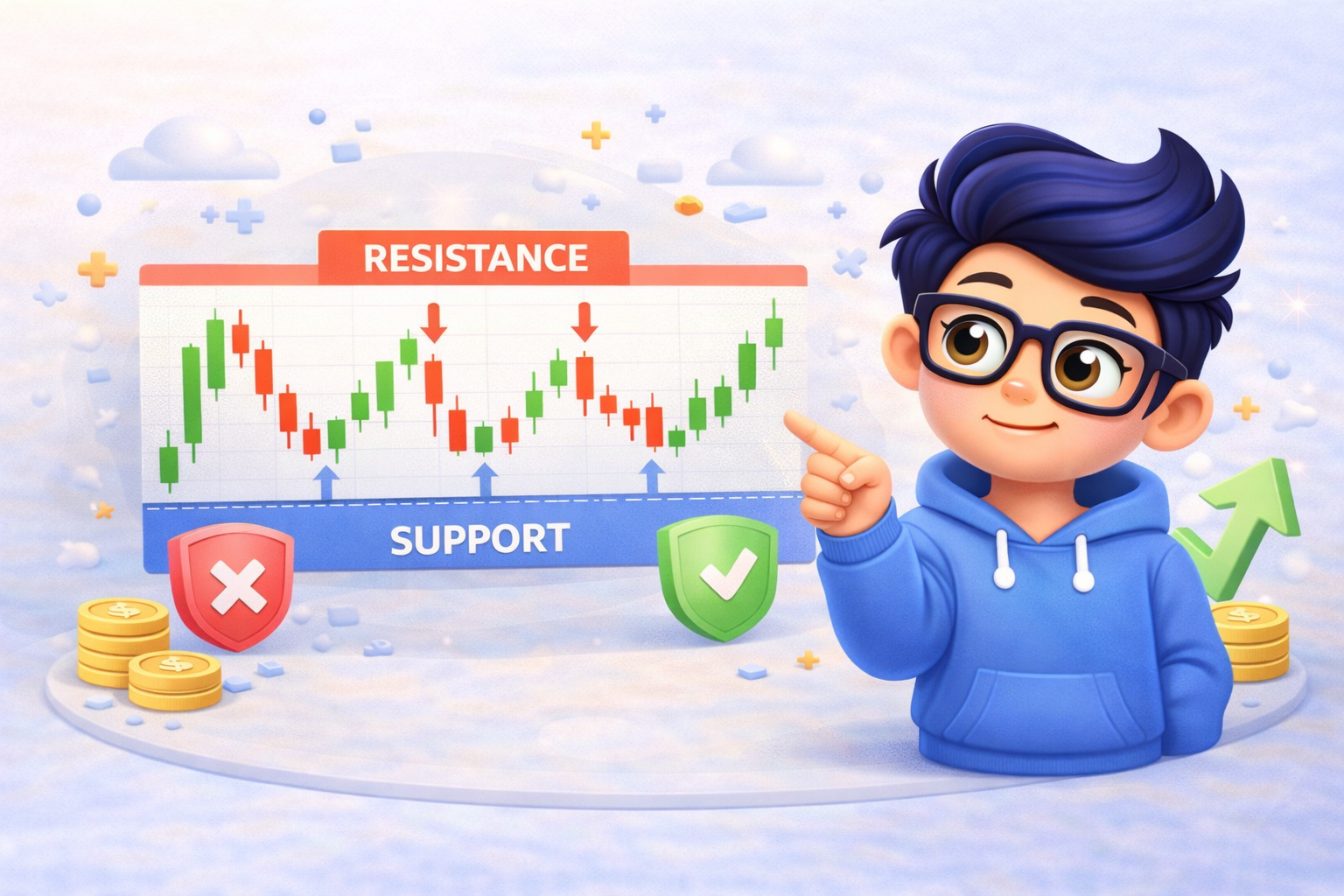
2. Support and Resistance
Moving averages can act as dynamic support and resistance levels.
👉 Learn more: support and resistance explained
3. Moving Average Crossovers
This is when two moving averages cross each other.
- Short-term MA crossing above long-term MA → possible buy signal
- Short-term MA crossing below long-term MA → possible sell signal
Common Moving Average Settings
Some commonly used settings include:
- 10-period (short-term)
- 20-period (short-term)
- 50-period (medium-term)
- 200-period (long-term)
These are not rules — just common starting points.
Common Beginner Mistakes
- Using too many moving averages at once
- Relying only on moving averages
- Ignoring market context
- Using settings without understanding them
Keep your chart simple and focus on understanding how price behaves.
Frequently Asked Questions (FAQ)
Which moving average is better, SMA or EMA?
Neither is better. SMA is smoother, while EMA reacts faster. It depends on your strategy.
Are moving averages good for beginners?
Yes. They are one of the easiest indicators to understand and use.
Do moving averages work in all markets?
Yes. They can be used in forex, stocks, and crypto trading.
Final Thoughts
Moving averages are simple but powerful tools in trading.
They help you understand trends, reduce noise, and make better decisions.
Start simple, experiment with different settings, and see what works for you.

1 Comment