







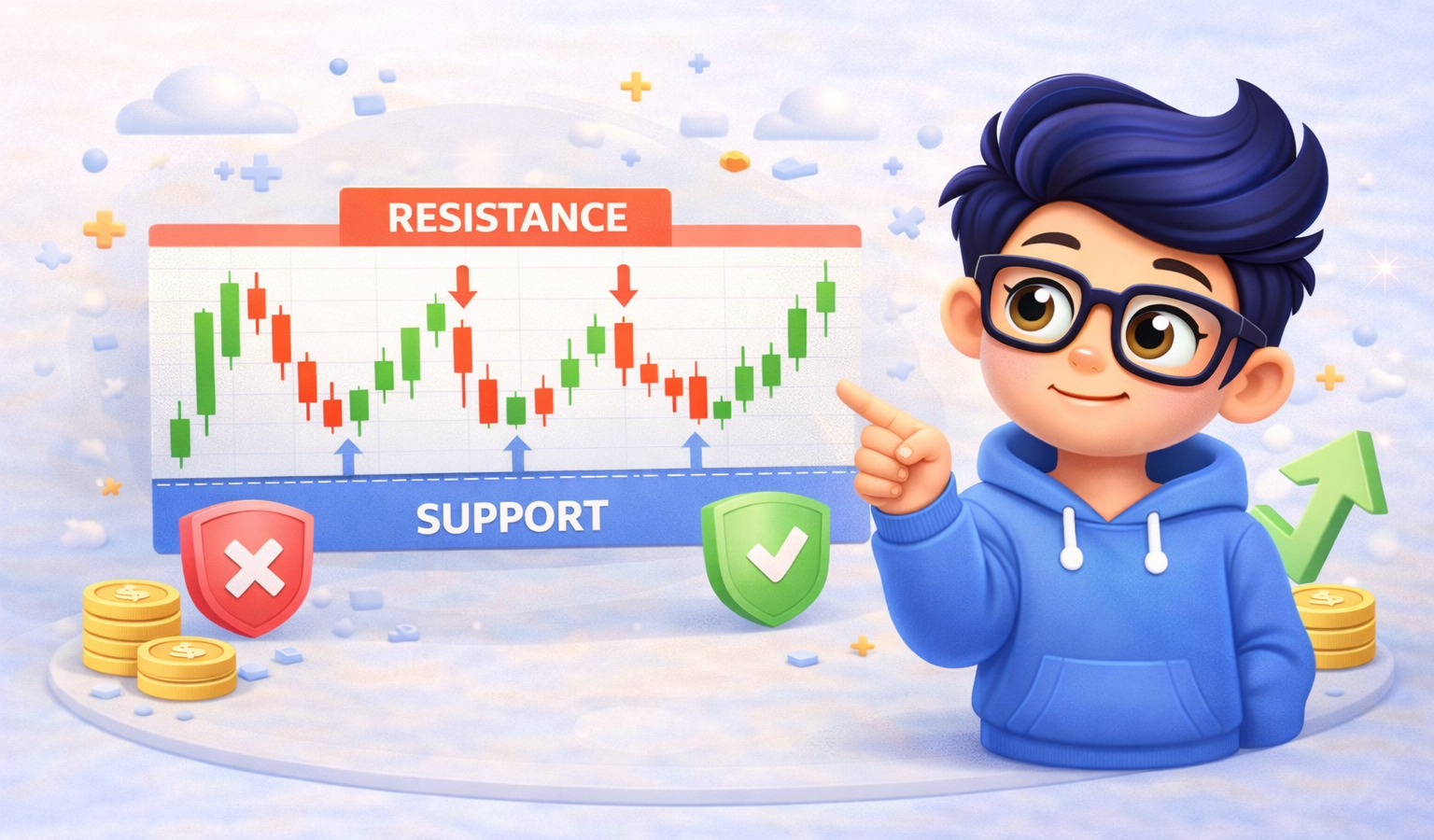
If you’ve been learning trading, you’ve probably heard them throw the terms support and resistance around like it’s nothing, to be frank, it is nothing until you make something out of it. (word, word, word). Im sorry for that. lets come back to reality.
These are some of the most important concepts in technical analysis, and almost every trader uses them.
The good news is, they are much easier to understand than they sound.
In this guide, you’ll learn what support and resistance are, how they work, and how to use them in trading.
What Is Support?
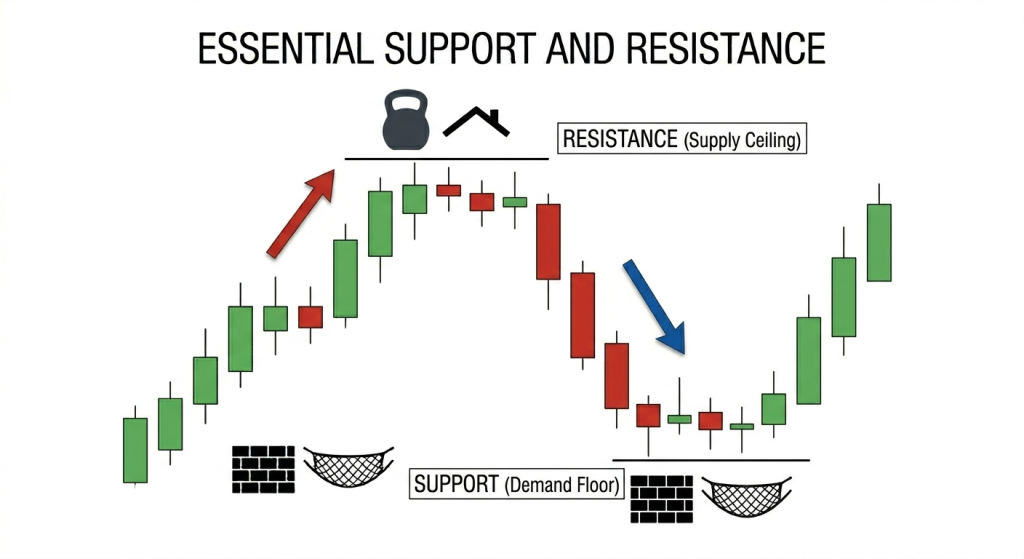
Support is a price level where the market tends to stop falling and start moving upward.
This happens because buyers step in and create demand.
In simple terms:
Support is where price finds a “floor”.
What Is Resistance?
Resistance is a price level where the market tends to stop rising and start moving downward.
This happens because sellers step in and create supply.
In simple terms:
Resistance is where price finds a “ceiling”.
Why Support and Resistance Work
Support and resistance work because of market behavior.
Traders often remember key price levels where the market reacted before.
When price returns to those levels:
- Buyers may enter again at support
- Sellers may enter again at the resistance
This repeated behavior is what makes these levels important.
👉 Learn more: what is technical analysis
How to Identify Support and Resistance
You don’t need complicated tools to find these levels.
Here are simple ways to identify them:
1. Look for Repeated Price Reactions
Find areas where the price has bounced multiple times.
2. Use Previous Highs and Lows
Previous highs often act as resistance, and previous lows act as support.
3. Draw Horizontal Lines
Mark key levels on your chart using horizontal lines.
👉 Practice this on MT4, MT5, or TradingView
Support and Resistance in Action
When price reaches support or resistance, three things can happen:
1. Bounce
Price reverses direction.
2. Breakout
Price breaks through the level and continues moving.
3. Fake Breakout
Price breaks the level briefly and then reverses.
Role Reversal: Support Becomes Resistance
One important concept is that levels can switch roles.
- Broken resistance can become support
- Broken support can become resistance
This is known as role reversal.
How Traders Use Support and Resistance
Traders use these levels to:
- find entry points
- set stop losses
- set take profit levels
For example:
- Buy near support
- Sell near resistance
👉 Combine this with candlestick patterns for better results
Common Beginner Mistakes
- Drawing too many lines
- Forcing levels that are not clear
- Ignoring overall trend
- Expecting levels to always hold
Keep it simple and focus on clear, obvious levels.
Frequently Asked Questions (FAQ)
Are support and resistance levels always accurate?
No. They are not exact points but zones where price may react.
Can beginners use support and resistance?
Yes. It is one of the easiest and most useful concepts for beginners.
Do support and resistance work in all markets?
Yes. They can be used in forex, stocks, and crypto.
Final Thoughts
Support and resistance are essential tools for understanding price movement.
They help you see where the market might react and give structure to your analysis.
Start simple, practice regularly, and improve your ability to spot key levels over time.
👉 Next: How to Draw Trendlines Correctly


3 Comments