

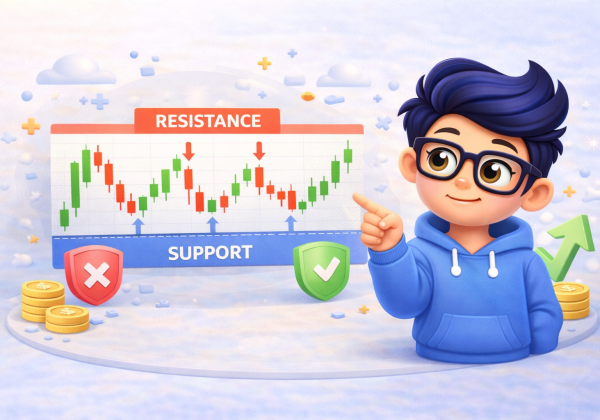
A lot of people get confused when they hear the word trading.
That’s because the word itself is used in many different contexts. You hear it in business, in everyday life, and in finance, so it can seem like different things depending on where it’s used. But in reality, the core meaning stays the same.
Let’s start from the basics.
What Is Trading?

In any context, trading simply means buying and selling something to make a profit.
It doesn’t matter what the item is.
You can trade:
- food
- electronics
- clothes
- stocks
- currencies
- or shares of a company
The idea is always the same:
buy at one price, sell at another, and keep the difference.
So when people talk about trading, they are usually talking about this simple concept, just applied in different environments.
What Trading Means in the Financial Market
Now, let’s narrow it down to what most people mean today when they say trading.
In the financial markets, trading refers to the buying and selling of:
- shares of companies (stocks)
- commodities like gold or oil
- currencies (forex)
- cryptocurrencies
The goal is still profit; nothing changes there.
What does change is how the trading happens.
Unlike physical trading, you don’t walk into a market and exchange goods by hand. Everything happens electronically through platforms, brokers, and financial systems.
And here’s the part that surprises many beginners:
You Don’t Actually Need to Own the Asset
When you trade in the financial market, you usually(most of the time) don’t own the physical thing.
- You don’t hold the gold
- You don’t store the oil
- You don’t keep cash under your bed
Instead, you are trading price movement.
You’re speculating on whether the price of an asset will go up or down and profiting from that movement.
This is one of the biggest differences between traditional buying and financial trading.
Why Trading Looks Confusing From the Outside
If you’re here, it probably means you’ve seen trading somewhere before.
Maybe:
- on social media
- in ads
- on YouTube
- or even on TV
And depending on where you saw it, trading was made to look either:
- ridiculously easy
- or extremely complicated
One moment it looks like people are making money with a few clicks.
The next moment it looks like something only experts with complicated charts can understand.
That contrast is confusing, especially for beginners.
But don’t worry. Trading is neither magic nor impossible.
Once you understand what’s actually happening behind the scenes, everything becomes much clearer.
How Trading Actually Works (Behind the Scenes)
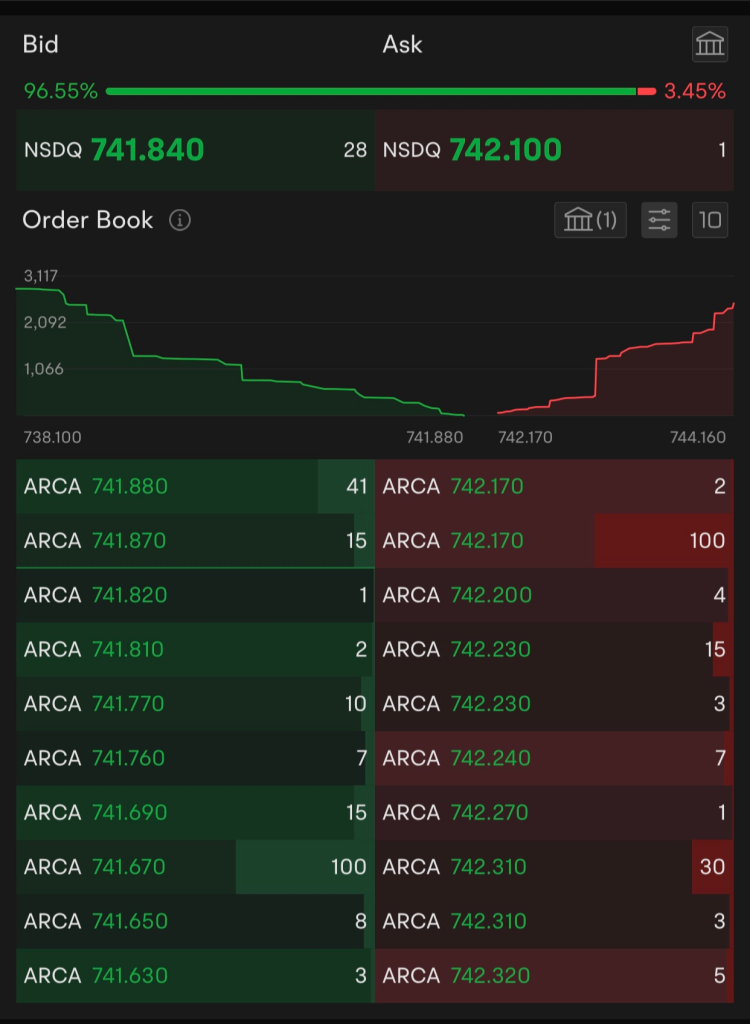
When you place a trade, you are not trading against “the market” as some mysterious entity.
You are trading against other participants.
For every buy order, there must be someone willing to sell.
For every sell order, someone must be willing to buy.
This simple idea is the foundation of all price movement.
Buyers, Sellers, and Price Movement
Prices move because of an imbalance.
- If there are more buyers than sellers at a certain price, the price moves up
- If there are more sellers than buyers, the price moves down
That’s it.
News, indicators, and opinions don’t move prices by themselves.
They influence people and algorithms, which then place buy or sell orders.
Price is simply the result of a constant negotiation between buyers and sellers.
Orders and the Market Engine
Every trade starts with an order.
An order is just an instruction that tells the system:
- what you want to trade
- how much you want to trade
- and at what price
Behind the scenes, these orders go into a system whose job is to match buyers and sellers. You can think of the market as a matching engine.
When a buy order and a sell order agree on price, a trade is executed.
The charts you see on your screen are simply a visual history of these executed trades over time.
The Role of Brokers and Platforms
As a retail trader, you don’t connect directly to the market’s core systems.
Instead, you use:
- a trading platform (like MT4, MT5, or TradingView)
- and a broker as an intermediary
Your platform sends your order to your broker, and your broker handles the execution behind the scenes.
From your side, everything feels instant.
In reality, a lot is happening very fast in the background.
Trading vs Investing: What’s the Difference?
Trading and investing are often mixed up, but they are not the same thing.
The biggest difference is time.
- Trading focuses on shorter-term price movements
- Investing focuses on long-term value and growth
A trader might hold a position for minutes, hours, or days.
An investor might hold a position for years.
Neither is better than the other; they simply require different mindsets and tools.
Where Technology Fits Into Trading
Modern trading is heavily driven by technology.
- Charts are data visualizations
- Indicators are mathematical calculations
- Strategies are rule-based systems
- Bots are automated execution tools
Once you see trading through this lens, it becomes less emotional and more structured.
This tech-driven approach is what this blog focuses on: understanding the logic behind the market instead of chasing hype.
The Big Picture

Trading is not about being right all the time.
It’s about:
- understanding how markets work
- managing risk
- following a process
- and improving over time
Once you understand the foundation, everything else, strategies, indicators, automation, and even AI in trading, becomes easier to understand.
What’s Next?
Now that you understand what trading actually is, the next step is understanding how one of the largest markets in the world works.

1 Comment