







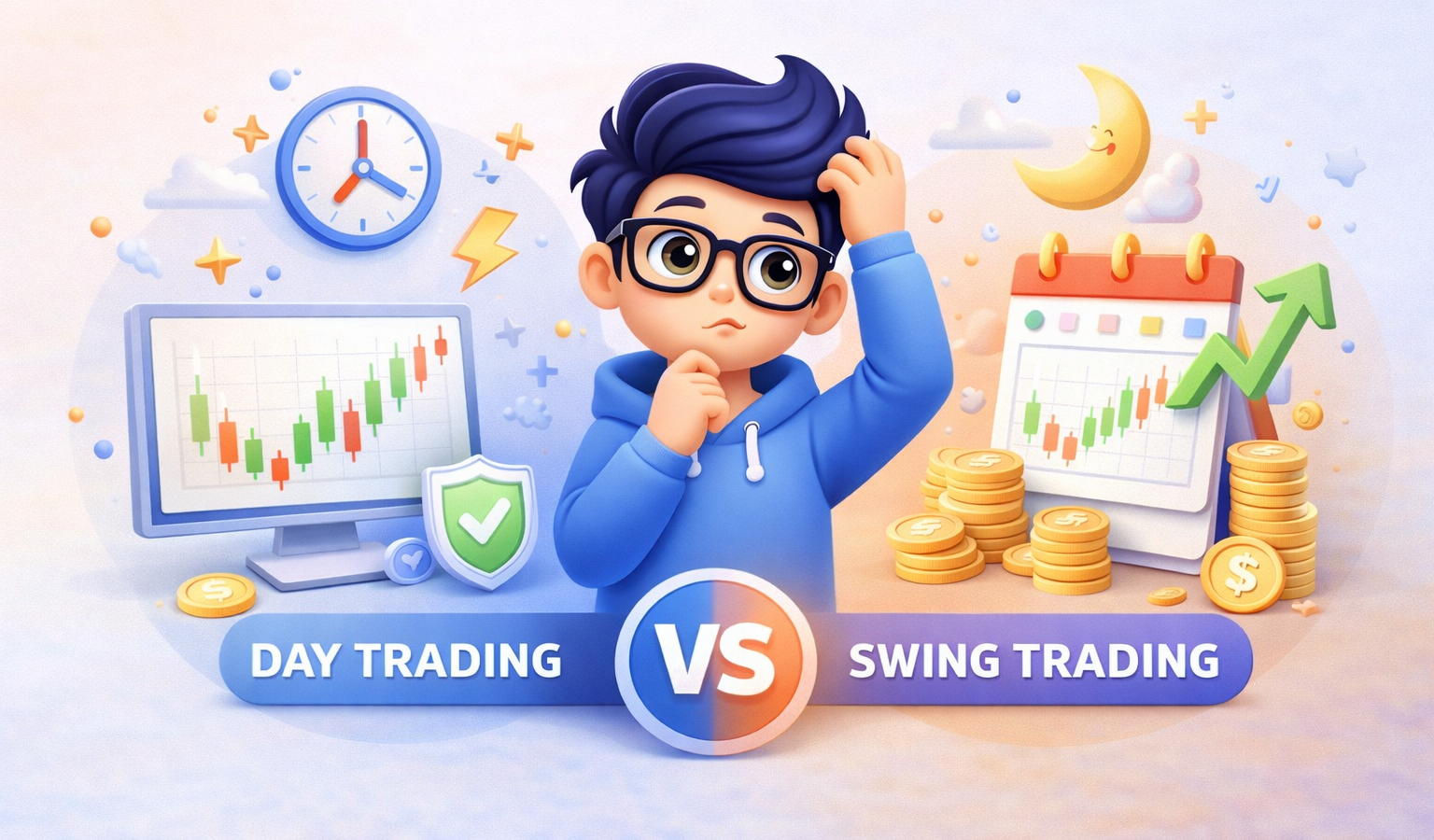
Coming into trading, you have probably heard about day trading and swing trading.
When you are starting out, you don’t need to concern yourself with it, but at a certain point, you’ll realise that your trading style might be favouring one and understanding it may help you build a better strategy.
Understanding the difference between day trading and swing trading is important because choosing the wrong style for your personality, schedule, and goals can make trading much harder than it needs to be.
In this beginner’s guide, you will learn what day trading and swing trading are, their pros and cons, and how to choose the one that fits you best.
What Is Day Trading?
Day trading is a trading style where all trades are opened and closed within the same day.
This means a day trader does not hold positions overnight. Trades may last for a few minutes or several hours, but they are usually closed before the trading day ends.
Day traders focus on:
- small price movements
- quick decision-making
- more frequent trading opportunities
What Is Swing Trading?
Swing trading is a slower trading style where traders hold positions for several days or even weeks.
Instead of focusing on very small intraday price movements, swing traders try to capture bigger market moves over time.
Swing traders usually focus on:
- larger price swings
- trend direction
- fewer but more selective trades
Day Trading vs Swing Trading: Key Differences
The main difference between day trading and swing trading is the amount of time trades are held, but that is not the only difference.
1. Trade Duration
- Day trading: trades last minutes to hours
- Swing trading: trades last days to weeks
2. Number of Trades
- Day trading: more trades in a short period
- Swing trading: fewer trades over a longer period
3. Screen Time
- Day trading: requires more time watching charts
- Swing trading: more flexible and less demanding during the day
4. Stress Level
- Day trading: usually more intense and stressful
- Swing trading: usually calmer and slower-paced
Pros of Day Trading
1. No Overnight Risk
Because trades are closed the same day, day traders avoid overnight market moves that can happen while they are away from the screen.
2. More Trading Opportunities
Day trading can offer multiple opportunities in a single day, especially in active markets.
3. Faster Feedback
With day trading, you quickly see the result of your decisions. This can help traders learn faster, although it can also increase pressure.
Cons of Day Trading
1. High Stress
Day trading often requires fast decisions under pressure, which can be mentally exhausting.
2. Requires Constant Attention
To day trade effectively, you usually need to stay close to the charts and monitor price action throughout the day.
3. Higher Trading Costs
Because day traders place more trades, they usually pay more in spreads and commissions over time.
Pros of Swing Trading
1. Less Screen Time
Swing trading is more flexible because you do not need to watch the market every minute of the day.
2. Bigger Price Moves
Swing traders aim to catch larger market movements, which can sometimes lead to better reward relative to effort.
3. Lower Pressure
Because there are fewer decisions to make, swing trading often feels less stressful than day trading.
Cons of Swing Trading
1. Overnight Risk
Swing traders hold positions overnight, which means market gaps or unexpected news can affect trades.
2. Slower Results
Swing trades take longer to develop, so patience is required.
3. Patience Is Essential
Many beginners struggle with waiting. Swing trading rewards patience, but not everyone finds that easy.
Is Day Trading or Swing Trading Better for Beginners?
For many beginners, swing trading is often the easier starting point.
That is because swing trading usually gives you:
- more time to think
- less emotional pressure
- fewer decisions to make
Day trading is not bad, but it often demands:
- strong discipline
- fast decision-making
- good emotional control
If you are still learning how markets move, swing trading may feel more manageable at the beginning.
Can You Do Both Day Trading and Swing Trading?
Yes, some traders do both. But it is usually better to keep them separate.
For example, you might use one account or strategy for short-term trades and another for longer-term setups.
The problem comes when beginners mix both styles without a plan. That usually leads to confusion, poor risk management, and inconsistent decisions.
How Technology Helps Both Trading Styles
Technology plays a big role in both day trading and swing trading.
For day traders, fast platforms and execution matter a lot. For swing traders, alerts, charting tools, and analysis platforms can make trading easier.
As traders become more advanced, they may also use:
- trading bots
- automated alerts
- data analysis tools
- backtesting systems
This is why understanding trading and technology together can give you an advantage over time.
How to Choose Between Day Trading and Swing Trading
If you are unsure which trading style fits you, ask yourself these questions:
- Do I have time to watch charts all day?
- Do I prefer fast action or slower analysis?
- Can I handle quick decisions under pressure?
- Am I patient enough to hold trades for days?
Your answers can help you choose a trading style that matches your personality and lifestyle.
Final Thoughts on Day Trading vs Swing Trading
There is no single best trading style for everyone.
When comparing day trading vs swing trading, the best choice depends on your time, mindset, and goals.
Day trading may suit people who like speed, action, and constant involvement. Swing trading may suit people who prefer patience, structure, and flexibility.
The most important thing is to choose one style, learn it properly, and stay consistent long enough to improve.
👉 Next: What Are Trading Platforms (MT4, MT5, and TradingView)?



1 Comment